AC MARCA
Automated Storage System
The redevelopment of the area presented AC Marca with the choice of either relocating or automating.
After months of detailed analysis of its entire intralogistics operation, it became clear that automating and optimizing its production and logistics processes opened up alternatives to relocation. And that’s exactly what we did.
AC Marca
Grupo AC Marca is a Spanish manufacturer of consumer goods. Headquartered in L'Hospitalet de Llobregat (Barcelona), the group has a portfolio of more than 25 brands across four business areas—household cleaning and care, hygiene and personal care, adhesives and DIY, and pharmacy-grade dermocosmetics— including well-known brands such as Norit, Gior, Orion, Sanytol, Ceys, and Lactovit.
The Challenge
The redevelopment of the industrial zone in Hospitalet de Llobregat, where the AC Marca factory was located, forced the company to consider an inevitable relocation. This situation presented the company with the dilemma of either relocating its production or automating its processes to become more competitive. After months of study, AC Marca determined that, by optimizing and automating its production and logistics processes, there were alternatives to relocation.

A move that seemed inevitable

Dilemma: Should We Outsource or Automate?

The Need for Explosion-Proof Areas

The need to coordinate three different buildings
The solution
from ULMA
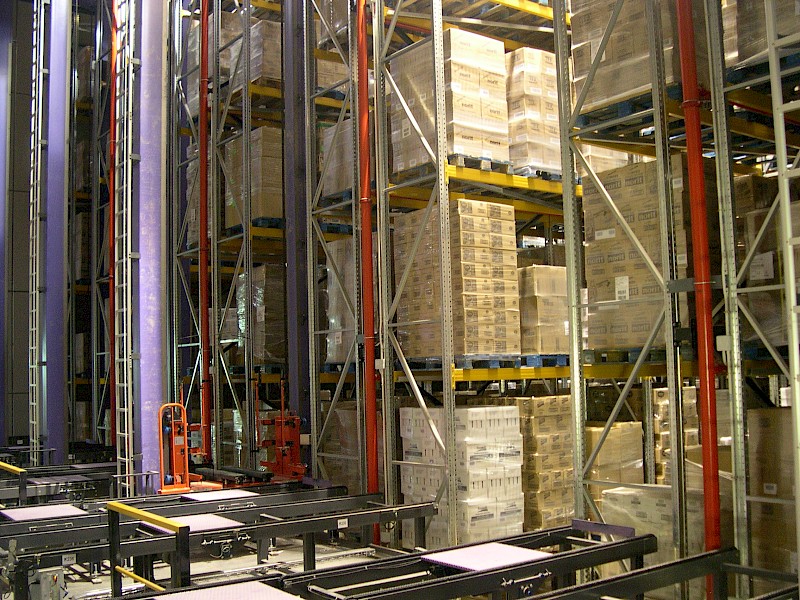
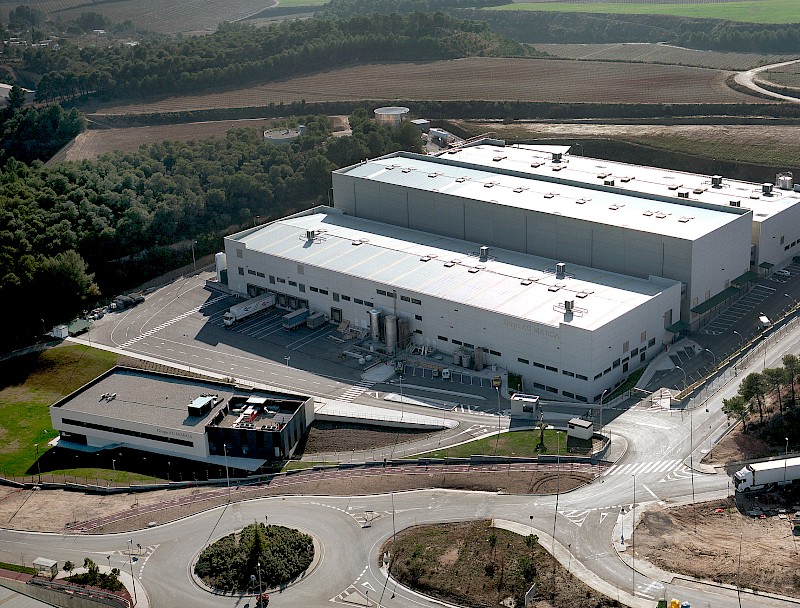
AC Marca’s new factory in Sant Llorenç d’Hortons consists of three parallel buildings, each approximately 120 meters long by 40 meters wide. The central building is a 24-meter-tall automated silo with a capacity for more than 12,000 pallets, featuring five stacker cranes—one of which is explosion-proof—and an innovative automated storage system designed for explosive environments, intended for products such as aerosols. It stores both finished products and containers and packaging, which are automatically supplied to the production areas.
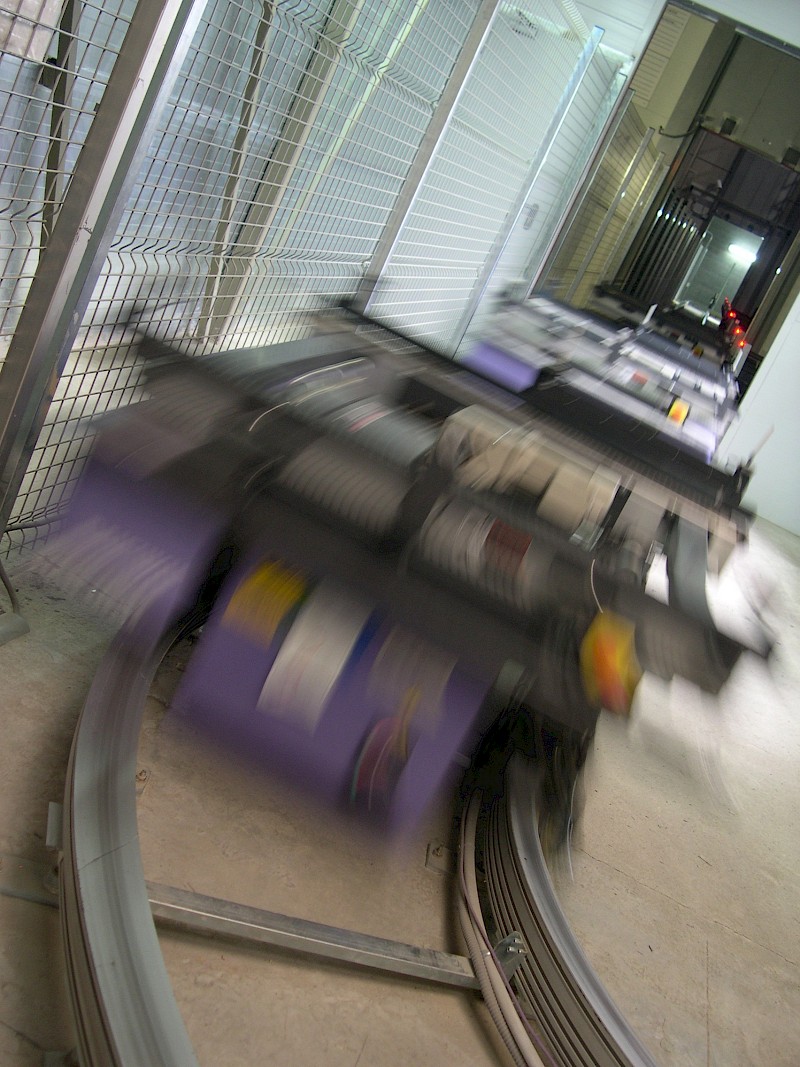
The silo is connected to the other two buildings—the AC Marca factory to the west, and the Laboratorios Genesse factory and shipping area to the east—via a closed-loop system of STVs, intelligent carts that deliver materials at a speed of 3 meters per second to any point in the plant. As a redundant system, AC Marca has another connection from the silo to the shipping area via a dual VTD (shuttle cart), capable of handling more than 50 pallet movements per hour, which allows it to operate independently of the rest of the plant if necessary.
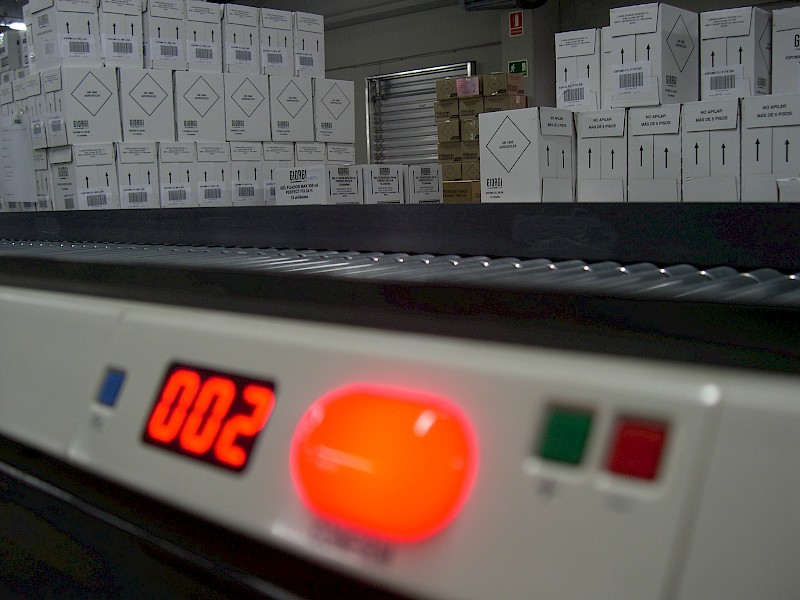
The order preparation and shipping area consists of three sections: a “Pick to Light” picking area, an automatic picking area (man-loaded), and an 18-channel order sorter with a capacity of more than 1,200 boxes per hour. Full pallets are shipped using an individual VTD and a 6-channel sorter.
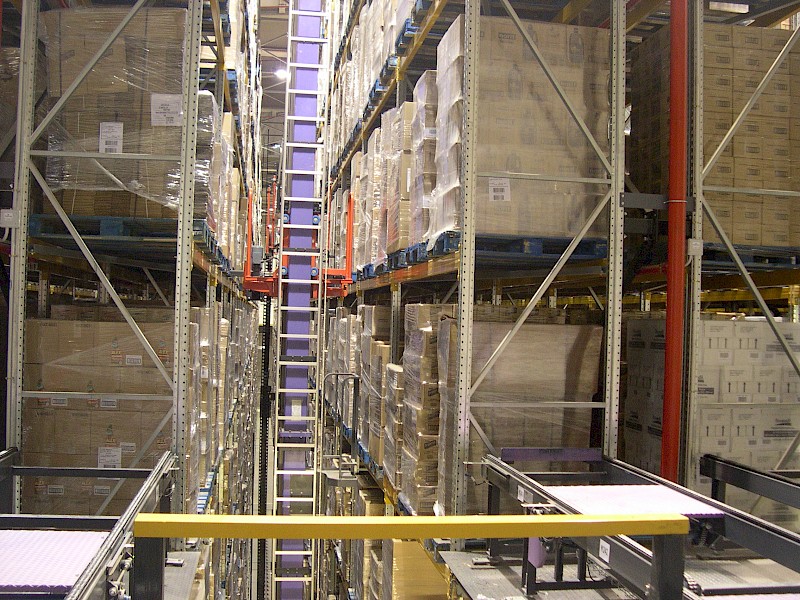
24-meter Explosion-Proof Automatic Silo
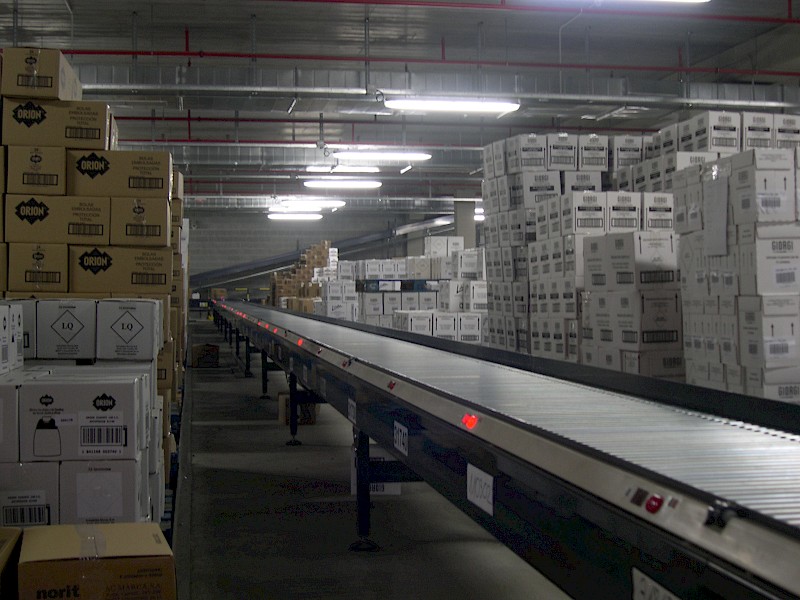
STVS Closed-Circuit System Between Buildings
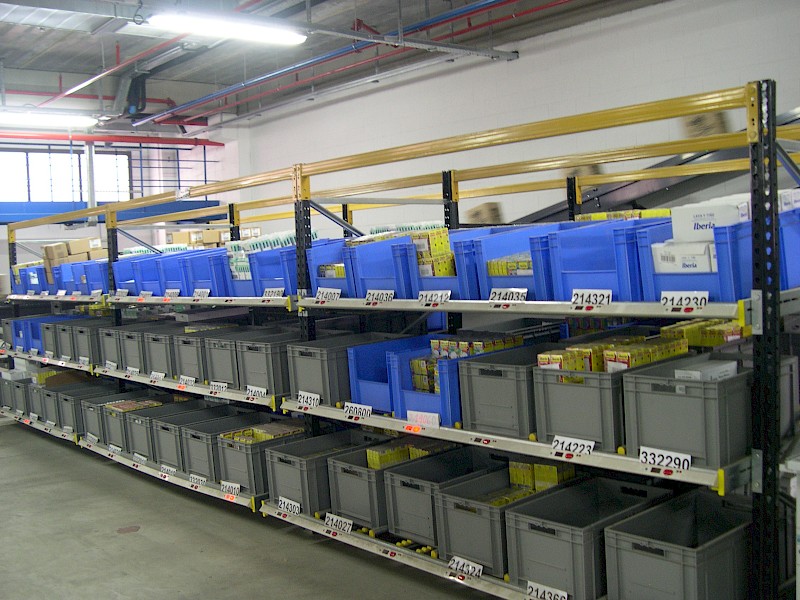
Order Picking and Sorting Area
The result
AC Marca, in collaboration with ULMA Handling Systems, has undertaken a reorganization of its internal logistics. In addition to introducing automation into its order storage, fulfillment, and sorting systems, this initiative has provided an effective solution to the challenge of increasing productivity while continuously improving its competitive position. The company can now confirm some of the anticipated savings, which have translated into greater productivity and flexibility at all levels—from the speed of material intake to the preparation and shipment of goods.

Greater competitiveness without offshoring

Safe storage in an explosion-proof silo

Three interconnected and coordinated buildings

Improvement in Operating Costs
Testimonial
"At ULMA Handling Systems, we value their flexibility and commitment, their innovative ideas backed by technological solutions, and their competitive pricing."
Pablo Casanova
Director of Logistics, AC Marca Group
"That redevelopment forced us to consider the inevitable relocation of the factory and presented us with the choice of either relocating or automating to become more competitive. It was then, after months of study, that it became clear that by optimizing and automating production and logistics processes, there were alternatives to relocation."